Part of the land we love is safe for now, not forever
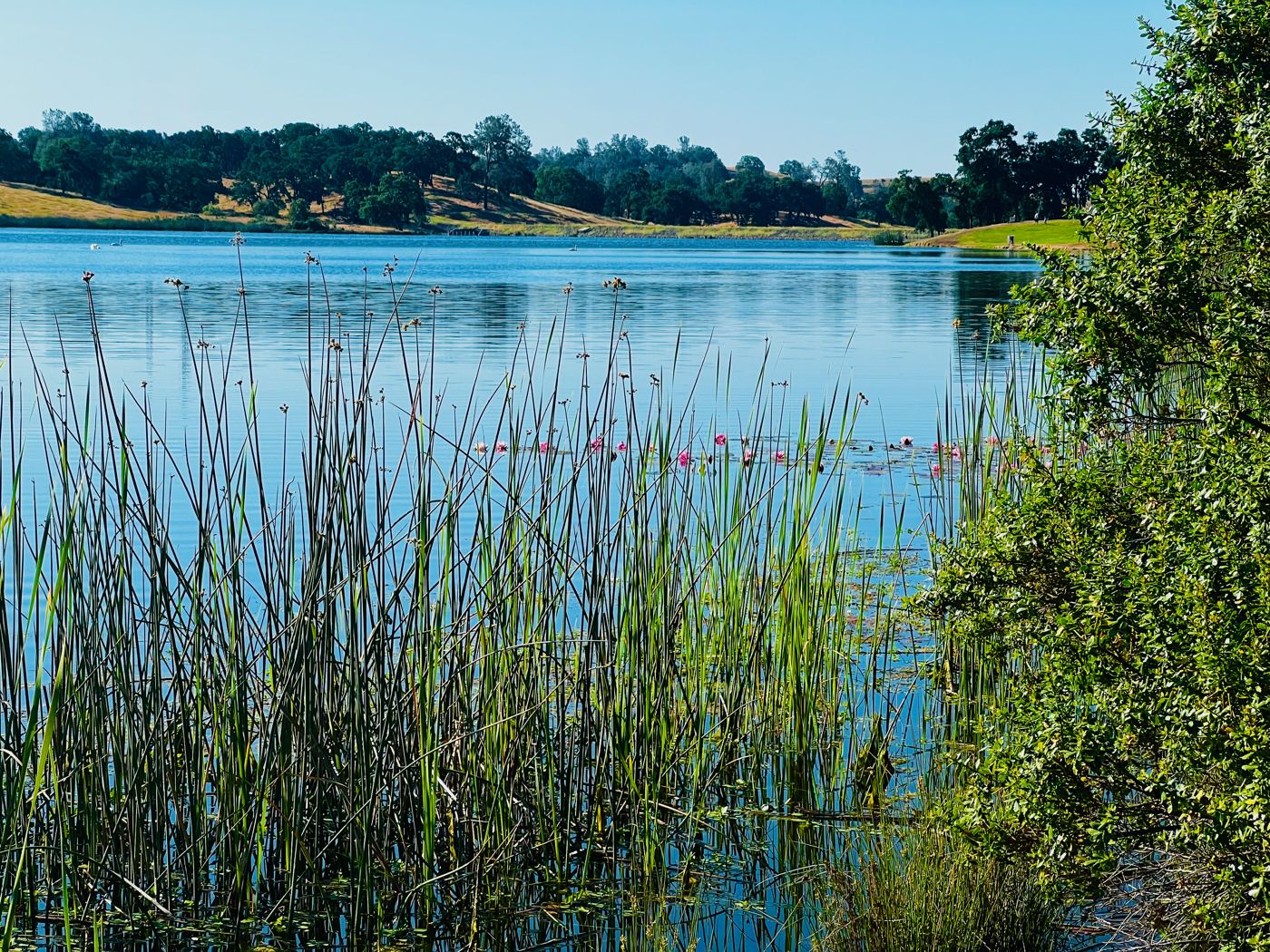
The trails, oaks and open hills behind our lakes are why many of us live here. Some of that land has been pulled from development. Some is still in the plan. None of it is permanently protected.
Part of the back lake development was dropped in January 2025. Rancho Murieta Properties removed 139 home lots around the back lakes (Villages D, E, F and G, now shown as Lot 11) from its county application. Its chief operating officer said slopes, drainage, trees and open space made the homes not worth building. The decision was made in October 2024. Board President Merchant announced it himself on Jan. 9, 2025, calling it a "compromise." River Valley Times, Jan. 10, 2025
- What's still in the plan: the rest of Rancho Murieta North, 561 home lots, is still in its county application. Water for them was described as "vague" and still to be discussed.
- What's "for now": 39 acres next to the CSD office were also pulled, with 88 homes and 160 apartments, but only "for now."
- What's missing: permanent protection. Taking land out of an application is not a conservation easement. The owner could file again later.
- Easements already work here. Van Vleck Ranch, across the highway from Rancho Murieta, is protected by two conservation easements (285 acres in 2017 and 450 acres in 2019) held by the California Rangeland Trust. Both were paid for by developers to offset development elsewhere Source. Rancho Murieta North Properties also already has conservation easements in place.
Credit where it's due: Rancho Murieta Properties removed potential development in a critical natural space. That is real progress.
So why is the land still at risk? The part that was pulled has no permanent protection, and the rest is still planned for homes. Land can be sold, plans can be refiled, and a court fight over water raises the stakes for everyone. Only a permanent easement, recorded on the deed, keeps it safe.
Three water facts every resident should know
All our water comes from the Cosumnes River. In the 1975–78 drought, the river ran too low to pump for 19 months. Source
No backup source
No wells and no pipe to another water district. Wells have been planned since 2013. None were built. Source
Short even without new homes
The CSD's own volunteer Work Group found today's homes would run short in a repeat of the historic drought. Source
Rio Oso is wearing out
The tank that serves the upper part of town needs repair within two years, staff say. Source
A third tank, still on paper
Recommended in early 2025 for emergency storage and fire protection. No approved site, design or funding yet. Source
days until Jan. 1, 2027. By then, state law requires water systems our size to have at least one backup water source, or a pipe to another system. Rancho Murieta has none today.
- Who it covers: systems with 15 to 2,999 connections. We have about 2,900, so it covers us.
- The law: Senate Bill 552 (2021), now Water Code section 10609.62.
- The fine print: it applies "subject to funding availability" and names no specific fine. Missing it still leaves us with no backup in a drought.
In November 2025, a director said the District has "no risk" while it stays under 3,000 connections. This law applies precisely because we are under 3,000.
Our storage tanks, in millions of gallons
By drift or by design?
Two years of inefficiency: a District without permanent leaders, re-studying settled questions, and losing the volunteers who were doing the work.
A slow walk: projects pulled from agendas, new conditions added, and work handed to jobs no one had filled.
The record doesn't prove which. Either way, residents paid for it, and we still have no new water.
Two years, no new water
Tap any project to see what happened.
Wells (backup source)
On holdTap for detailsClose
Wells (backup source)
On hold- A hydrogeologist found two promising well sites in 2012–13. The District never developed them.
- January 2026: a District-paid desktop study ($80,700) found 6–7 possible well sites, about 3 of them viable.
- April 15, 2026: a $90,000 field study to pinpoint water, recommended by the Water Vision Working Group, was voted down 3–2. It would have been paid by developer fees, not ratepayers.
- The test-well agreement was pulled twice, in March and April, and sent to the water attorney with a July target. In October it was still pending.
- Meanwhile, drilling costs have risen from about $125 to over $500 per foot.
Third storage tank
On holdTap for detailsClose
Third storage tank
On hold- Recommended in February 2025. About 2.5 million gallons; estimated $7.8–9.8 million.
- A preferred site was picked in November 2025, but formal land talks never started.
- Nov. 19, 2025: a District letter told a developer to build the tank (at least $8 million) before getting more water meters. A two-director committee directed it. District counsel later said such a committee can't make board decisions, and the full board rescinded the letter on Feb. 18, 2026. The developer said it cost him $25,000 to respond.
- Off the committee agenda since January 2026. Now waiting on a water-demand number.
Fee on new homes
On holdTap for detailsClose
Fee on new homes
On hold- New homes pay $7,753 toward new water today.
- A consultant said it should be $20,436 to fund a well program.
- Tabled in November 2025 as "premature." Still on hold.
Rio Oso tank repair
On holdTap for detailsClose
Rio Oso tank repair
On hold- May 2026: a valve upgrade was stopped after about $81,000 in design work. Staff now adjust it by hand.
- Staff want the tank repaired within two years.
- October 2026: repair left for the new General Manager.
Lake Clementia backup
On holdTap for detailsClose
Lake Clementia backup
On hold- The state permit doesn't allow drinking-water use while swimming is allowed.
- August 2026: re-permitting "not started."
- October 2026: one legal question sent on to the board.
Water Vision Working Group
DisbandedTap for detailsClose
Water Vision Working Group
Disbanded- Primarily volunteers, including engineers, working on wells, a water audit, the long-term water plan and Lake Clementia.
- Disbanded by the board in late summer 2026.
- Its work was handed to a GM and operations director not yet hired. No one was named to own it.
The price of two years
- Water attorney, August 2026 alone Source$34,860
- General counsel, one May 2026 payment Source$38,115
- General counsel, August 2026 Source$9,486
- Rio Oso valve design, then shelved Source$81,260
Documented so far$163,720
Only the bills we could find in public packets. The District hasn't published a total for legal costs.
Not in that total yet
- Reimbursements landowners say they're owed, now in court Source$1.2M+
- Well drilling cost per foot, up from about $125 Source$500+
- New-home water fee left on hold, per home Current fees Fee study$12,683
- Third tank estimate, rising while it waits Source$7.8–9.8M
- Settlement with the former General Manager, the start of the leadership gap (District share) Source$200,000
What the record shows
Signs of drift
- About 15 months from the GM's leave to a public job posting Leave Posting
- The top operations job is still interim Source
- A July target for well agreements came and went Target August status
- A desktop study found well sites; the follow-up field study was voted down Source
- The volunteer water group was disbanded with no one named to take over Source
Signs of design
- A two-director committee directed a major letter to a developer; District counsel said such a committee can't make board decisions, and the board rescinded it Source
- The third tank has been off the committee agenda since January 2026 Last on agenda Source
- A law firm sent the board a notice about its agenda practices Source
- Questions the volunteer group wrote for the water attorney in March were never sent on Oct. 7 meeting
- According to developer Bob Keil, tank-site talks happened off the agenda Oct. 7 meeting
In the District's own words
"Securing a reliable secondary water source."
Listed as a top priority in the District's own General Manager job posting, spring 2026 (posting)
"We've been through this for 10 years. We need to move forward."
District counsel Patrick Enright, April 15, 2026 (River Valley Times)
"Diligently, conscientiously, and expeditiously."
How the District agreed in 1991 to pursue new water, as reported from the landowners' lawsuit (River Valley Times)
Delay won't get us more water, and it won't save the land
The CSD doesn't decide land use
Sacramento County approves development. The CSD's job is water. Source
It's already in court
Landowners argue water can't be used as a back-door "no growth" policy, and they are suing. Source
Ratepayers pay either way
Legal bills, settlements and a backup source we need anyway all come from our rates.
Delay isn't protection
Boards change. Courts can order service. Years of delay end with the land still at risk, and our water system still short.
How to tell drift from design: a new General Manager starts Oct. 19. If this was drift, water projects should start moving within months. If they don't, that tells us something. Use the watch list to keep score.
The better path: protect the land forever
A permanent easement on the land already pulled from development, and on more open space where owners are willing, saves water, raises home values, avoids legal costs and lasts forever. Delay does none of that.
It saves water
The District's own Work Group numbers show that dropping Villages D–G cuts the extra water needed at full buildout from 2,508 to 2,202 acre-feet. That is about 300 acre-feet less drought shortfall to make up. Source
Protected hillsides also keep new roads, roofs and yard runoff away from the lakes that hold our water.
It raises home values
A 2025 national study by UC Berkeley, University of Chicago and Resources for the Future economists found home prices rose about 10% in communities around protected habitat. Source
A widely cited parks study puts the premium for homes facing natural open space near 20%, with effects reaching 500 to 2,000 feet. Source On a home, 10% is $10,000 for every $100,000 of value.
It costs less and ends the fight
An easement is a voluntary sale or donation, not a lawsuit. The owner keeps the land. Approved homes elsewhere still connect and pay their share of new water, so growth pays for growth. How easements work
It lasts
A moratorium ends and boards change. An easement is recorded on the deed and binds every future owner. The trails, oaks and wildlife are protected for our children and grandchildren.
It's a proven model, including next door
| Place | What's protected | Takeaway |
|---|---|---|
| Van Vleck Ranch, across the highway | 735 acres in two easements (2017, 2019) | Paid for by developers as mitigation. Source |
| Lagoon Valley, Vacaville | About 85% of the land, 1,300+ acres, kept as open space | Built as a "conservation community," with about 1,000 homes approved alongside it. Source |
| Santa Lucia Preserve, Carmel Valley | About 18,000 of 20,000 acres (90%) | Only 297 homesites, clustered so the land around them stays protected. Source |
| Years of delay | Conservation easement | |
|---|---|---|
| Water | No backup source; drought risk grows | Less demand, and the water system gets built |
| Home values | Uncertainty and lawsuits weigh on the market | A permanent natural amenity next to our homes |
| Cost to residents | Legal bills, rising build costs, ratepayers cover more | Grants, tax credits and developer mitigation share the cost |
| How long it lasts | Until the next board or court ruling | Forever |
Home value studies show averages across many places. Results vary by location, and no study has measured Rancho Murieta specifically.
Ways to protect it, by risk. Tap to learn how each works.
Conservation easement
Low riskHow it worksClose
Conservation easement
Low riskThe owner sells only the right to develop and keeps the land. A land trust protects it forever.
Land purchase
Low riskHow it worksClose
Land purchase
Low riskA land trust or the county buys it outright, as at Deer Creek Hills (4,060 acres). Needs a willing seller and funding.
Donation with tax credit
Low riskHow it worksClose
Donation with tax credit
Low riskThe owner gives land or an easement and gets a state tax credit.
Speak up at the county
Low riskHow it worksClose
Speak up at the county
Low riskComment on the Rancho Murieta North review and ask for trail and open-space conditions.
Density trade
Low to mediumHow it worksClose
Density trade
Low to mediumThe owner moves some planned homes into areas already filed with the county, in exchange for protecting the rest. Needs county approval.
Long-term delay of water projects
High riskHow it worksClose
Long-term delay of water projects
High riskKeep tanks, wells and fees stalled so new homes can't connect. It invites lawsuits, leaves current homes without a backup, and protects nothing permanently.
Steps the community can take
- Start with Lot 11. The former Villages D–G around the back lakes are already out of the county application. Make that permanent with an easement.
- Start with trails we use. Rancho Murieta North's plan already has a trail map.
- Bring in a land trust. Sacramento Valley Conservancy already holds easements with Rancho Murieta North's owners.
- Line up money. Developer mitigation, the same way Van Vleck Ranch was protected; Prop 4, ranch easement grants like Tudesko Ranch, and a local match.
- Build a team to work with landowners: residents and a land trust who can negotiate a fair, funded easement, so protection happens by agreement, not by fight.
- Let the CSD do its job. Support building the water system.
What you can do
Get updates after every board meeting
This guide changes as the story does. Subscribe to Destination Rancho Murieta and we'll send you what changed, in plain language.
Key dates
- Say what you support. Tell the board and the candidates you want permanent easements for the open space around our lakes, starting with the land already pulled from development, and a real backup water source. Copy this:
I support permanent conservation easements for the open space around our lakes, starting with the land already pulled from development, and a reliable backup water source for Rancho Murieta. Delay protects neither.Copied
- Speak at the Oct. 21 board meeting. Anyone can make a public comment. Ask for dates on the third tank, test well and Rio Oso, and a plan for the Jan. 1 deadline.
- Ask the candidates before Nov. 3. Four of five board seats are on the ballot. Copy this question:
What will you do in your first 90 days to add water and storage?Copied
- Send questions to the District.
pio@rmcsd.comCopied
- Read the packets yourself on the CSD meetings page.
Dig deeper
The full record, for readers who want every date, vote and document. Tap a topic to open it.
Almost two years without permanent leaders
No permanent General Manager from January 2025 to October 19, 2026. The top operations job is still interim.
- Jan. 6, 2025 · General Manager placed on leave. Source
- May 2025 · GM resigns under a $375,000 settlement. Two directors, later Merchant and Gere, oversee staff. Source
- Sept. 1, 2025 · Director of Operations goes on leave. The chief plant operator fills in. Source
- Sept. 17, 2025 · Interim GM named, about four months after the GM left. Source
- Feb. 18, 2026 · After several months of committee work, the board approves a new GM job description. Hiring a search firm is just starting. A job description for an operations manager is also approved. Source
- Spring 2026 · Permanent GM job posted by recruiter Peckham & McKenney. Applications due May 30, 2026, more than 16 months after the last GM was placed on leave. Posting Job board copy
- Oct. 19, 2026 · New GM starts. A permanent operations director is still to be hired. Source
"Legally, we haven't been without a general manager, and let's leave it at that."
"We are not going to go forever without a general manager."
Board President John Merchant, September 2025, asked about hiring a new GM (River Valley Times)
Why it matters: again and again, water work was set aside to wait for hires. The Rio Oso repair, the third tank and the volunteer group's tasks were all handed to a GM or operations director not yet in place.
The District's own GM job posting named the priorities: "securing a reliable secondary water source," advancing the Integrated Water Master Plan, rehabilitating aging water and sewer infrastructure, and "restoring institutional knowledge" (job posting). The same spring, the board voted down the well study, and the budget funded no storage, wells or new water.
Some residents see a delay tactic. Others note the last GM left under a legal settlement and a careful search takes time. Either way, water projects sat still while the jobs were empty.
The volunteer water group: disbanded, and no one owns the work
The board disbanded the Water Vision Working Group in late summer 2026. According to the minutes, its work was to go to the incoming GM, a future Director of Operations and standing committees. No person, date or budget was attached. Here is what was left without an owner.
| Unfinished work | Where it stands now |
|---|---|
| Well siting and test wells | Not on any agenda. Agreements still waiting on the attorney. |
| Water audit | Not on any agenda. |
| Long-term water plan | Which plan to finish (the master plan or the state-style plan) is still undecided. |
| Questions for the water attorney | Written by the group and given to staff in March 2026. In October, the committee sent on one question instead. |
| Lake Clementia as backup water | State permit work not started. |
On Oct. 7, a former group member asked that the third tank, wells, the water audit and the water plan be standing monthly agenda items. As of that meeting, none were.
The low-cost way
The working group was primarily volunteers, including engineers, who already knew the history. They could test ideas and measure results at little cost to ratepayers.
The high-cost way
The work now waits for a General Manager who started Oct. 19 and is still learning the system. That means paid staff time, likely paid consultants, and a slower restart.
Why it matters: disbanding the group arguably moved the work from the cheapest place to do it to the most expensive one, at the moment the new GM's learning curve is steepest.
Is the delay intentional? Both views, checked against the record
The formal moratorium failed in February 2026. The concern now is different: a long, quiet slow-down where nothing is voted down outright, but nothing gets built. The public record doesn't prove intent either way. Switch between the two views and decide for yourself.
- When the moratorium failed, the slow-down didn't stop. After the February 2026 emergency hearing, water projects kept stalling through process: more studies, legal review, items left off agendas.
- Adding water moved slowly. The test-well agreement was pulled twice and a $90,000 well study, paid by developer fees, was voted down in April 2026 (River Valley Times; board minutes).
- New conditions appeared. The board required land agreements before the well study, a condition it didn't set for the 2025 desktop study. District counsel called it "putting the cart before the horse" and said, "We've been through this for 10 years. We need to move forward" (River Valley Times).
- Work with no owner. The Water Vision Working Group was disbanded and its tasks handed to jobs not yet filled (Sept. 16 packet).
- Waiting on hires. Almost two years without a permanent GM, and big decisions kept waiting for one (River Valley Times; Feb. 2026 report).
- New water goes to a reserve first. Resolution R2025-03, adopted May 21, 2025, sends any new "secondary" water first to a one-year emergency reserve. Until that reserve is full, new water can't serve new homes. The landowners' lawsuit says this conflicts with the 1991 agreement (River Valley Times).
- The water group's own advice was rejected. The Water Vision Working Group recommended the field study to pinpoint well sites. The board voted it down, and the lawsuit cites that as evidence the District isn't pursuing water (River Valley Times).
- Much of the back lake land was already off the table. The owner dropped 139 lots around the back lakes in January 2025, and the Board President announced it. The moratorium vote, the well delays and the disbanding of the water group all came later (River Valley Times).
- The 3,000 line. A director said the District has "no risk" below 3,000 connections, where a full state water plan kicks in (River Valley Times).
- No money set aside. The 2026–27 budget funded no emergency storage, new water or test wells. Staff said the board hadn't given direction (June 17 minutes).
- Protecting current homes first. Resolution R2025-03 puts any new water toward a one-year emergency supply for the people already here. That is a real safety goal. A court will decide whether it conflicts with earlier promises (River Valley Times).
- The drought risk is real. Being careful before adding homes is reasonable (Work Group report).
- Money is tight. The water fund started 2024 with about $106,000 in cash (fee study).
- Legal care. Board President Merchant said the science wasn't his concern. Finding water on land the District doesn't control could put it "in a very expensive position," so he wanted ownership settled first (River Valley Times). The District hired a water attorney in 2026.
Checked against the record
The District already has signed commitments. Under a 1986 agreement amended in 1991, it agreed to pursue an extra 1,400 acre-feet of water for specified development, "diligently, conscientiously, and expeditiously," and not to hold back will-serve letters for those properties "on the basis of water supply considerations" (River Valley Times). Since 1990, its own policy has committed it to develop more water for buildout, paid for by developers. Agreements signed in 2014 had landowners fund treatment plant upgrades, and one landowner says it paid over $5.7 million. The District issued will-serve letters in 2024 (Residences, Riverview). One landowner says it has been providing land access for well testing, and a developer's project manager says at least one candidate site is on District land. The 2025 desktop study had no ownership condition. The July target for the attorney's well agreements passed with no agreement (August status: "gated by attorney").
- Land is hard to get. The owner of the preferred tank site won't give the land for free (River Valley Times).
Checked against the record
Land was offered. A developer offered the half-acre needed for a tank inside the Residences. In November 2025, staff reported another owner was willing to provide land at the preferred site. As of May 2026, formal negotiations for that site had not started. Meanwhile, landowners who paid under the 2014 agreements are suing the District over water service and those agreements. Their claims are still in court and not yet proven.
- Staff turnover. An interim manager ran the District until the new GM starts Oct. 19.
Checked against the record
The gap was largely the board's own pace. The GM went on leave in January 2025 and resigned in May. An interim wasn't named until September (River Valley Times). The job description wasn't approved until February 2026 (River Valley Times), and the job wasn't posted until spring 2026, with applications due May 30 (recruiter posting), more than 16 months after the GM was placed on leave. The posting itself listed "restoring institutional knowledge" as a priority. An operations manager job description was approved in February 2026; that job is still interim.
- An old problem. Wells were planned in 2013 (2013 well memo) and never built, under earlier boards too.
Checked against the record
True, which is why the Water Vision Working Group mattered. It was the low-cost group working on exactly these old problems: wells, a water audit, the water plan and Lake Clementia. Two promising well sites found in 2012–13 were never developed (River Valley Times). If the problem is a decade old, disbanding the group working on it, with no one named to take over, makes it older.
How the board voted
| Vote | Yes | No |
|---|---|---|
| Start a moratorium (Sept. 17, 2025) | Merchant, Butler, Gere | Jenco, Maybee |
| Groundwater study (Apr. 15, 2026), failed | Jenco, Maybee | Merchant, Butler, Gere |
In February 2026, a proposal to declare a water emergency failed when no director seconded it.
What it costs: now, later, legal, and a "who pays" calculator
- $35,000Water attorney bills in August 2026 alone. Source
- $81,000Spent on a Rio Oso valve upgrade that was then stopped. Source
- Higher ratesApproved June 2026, citing old pipes and low reserves. Source
- $12,700Per new home: the gap between today's water fee and the recommended one. Current residents may end up covering it. Current fees Fee study
- $15MEstimated well program. If new homes don't share it, current residents carry all of it. Source
- 4× higherWell drilling now costs over $500 per foot, up from about $125 when sites were first found. Every year of delay makes the backup source more expensive. Source
- $7.8–9.8MThird tank estimate. The longer it waits, the more it costs. Source
- Rio OsoA planned repair costs far less than an emergency replacement.
- LawsuitsSettlements or court losses not covered by insurance come from District funds, meaning ratepayers.
- Fewer payersThe system is built for about 3,000 homes. If growth stops, fixed costs are split among fewer households.
We found no state fines against the District so far. Legal costs are real, and most are tied to water and development disputes.
- $375,000GM departure settlement, May 2025. The District paid $200,000; insurance paid the rest. Source
- LawsuitRancho Murieta Properties and four affiliates sued on Aug. 3, 2026 (Case 26CV018522). They ask a judge to order the District to pursue 1,400 acre-feet of new water, provide promised water and sewer hookups, pay at least $1.2 million in reimbursements, and throw out the 2025 emergency-reserve resolution. The District said it "does not have a response at this time." Source Source
- 2 claimsRiver Canyon and Rancho Murieta 205 filed claims in 2026. The board rejected them. River Canyon and the District are in mediation; River Canyon also paid meter fees under protest. Mediation Source
- NoticeA law firm sent a notice about board agenda practices on Aug. 12, 2026. Source
- $38,000One May 2026 payment to the District's general counsel. Source
The District hasn't published a running total of legal costs. Residents can ask for one.
Try it: who pays for a backup water source?
The District's consultant estimated a $15 million well program. Move the slider to see how the cost splits between new homes and about 2,900 current households.
A simplified illustration, not a District estimate. Real costs depend on grants, financing and timing.
A 10-step plan to get our water built
We don't have to choose between water and open space. Build the water we need now, have new homes pay their share, and protect the land around our lakes by agreement.
- Water first on every agenda. Third tank, wells, Rio Oso and the fee, every month until done.
- Pick a planning number. Use today's best water-demand estimate and refine it later.
- Drill a test well. Give the attorney a deadline on the well agreements.
- Growth pays for growth. Update the new-home water fee.
- Open hookups in steps. New homes connect only as each tank or well comes online.
- Settle, don't sue. Trade meters for a builder-funded third tank. Post every deal publicly.
- Fix Rio Oso on a schedule, before it becomes an emergency.
- Keep Clementia a lake. Emergency-only water; swimming and boating continue.
- Protect the trails for good with a conservation easement, starting with the back lake land the owner already dropped from development.
- Go after state money. Prop 4 funds water resilience and land conservation.
Watch list: is water becoming the priority?
After each board meeting, mark what you saw. Your marks stay on this device only.
Where this comes from
Everything here comes from public CSD records, state law and local news.
CSD records
- Work Group water report, Aug. 2025
- Fee study and $15M well program, Nov. 2025
- Current connection fees
- Water emergency hearing transcript, Feb. 10, 2026
- Well deal pulled, March 2026
- April 2026 votes and Rio Oso valve memo
- Budget and rates, June 2026
- Lawsuit, claims and law firm notice, Aug. 2026
- Audit and settlement, Aug. 2026
- Legal payments and tank status, Sept. 2026
- CSD organizational chart
- General Manager recruitment, Peckham & McKenney · job board copy (CSAC)
Agreements already in place
State law and conservation
News and earlier reporting
- River Valley Times, Aug. 19, 2026: CSD sued over water, development agreements · River Canyon, District head to mediation · From moratorium talk to courtroom
- River Valley Times: Sept. 26, 2025 · Nov. 21, 2025 · Dec. 5, 2025 · Feb. 14, 2025 · Feb. 25, 2026: letter rescinded, GM search · Apr. 22, 2026: split vote halts groundwater study
- The Best Predictor of Future Behavior Is Past Behavior (DRM)